Friday, 1 June 2012

June 2012

Phase 1 - update:

Exhibition

Well we have been hard at work since our last blog update making artwork and developing the project further. Due to various reasons we have not yet managed to organise our exhibition but we are looking to hold this towards the end of 2012 at a venue tbc.....we have one in mind but not yet confirmed so we shall keep you posted!!

The main themes of the exhibition will be -

Sustainable arts practices from around the world and what this means to artists
Our relationship to the environment and how it compares across the world
Looking back at our heritage and craft and presenting it in a contemporary way
Crossing cultures and skills sharing 

Below are some artists who will feature in the exhibition:

Jaime Miranda – Jaime is a sculptor and photographer whom we met during our 
residency at Sachaqa Arts Centre, Peru - http://www.jaimemiranda.com/


LEO – Leo lives and works between Berlin and London and is currently Artist in Resident
at VARC – Visual Arts in Rural Communities in Tarset, Northumberland
(www.varc.org.uk). Leo is interested in the current nature of environmental art and
public art. - www.cskx.org/leo
 
                                        
    Trina Brammah – Trina is a painter and founder of Sachaqa Arts Centre .Trina works by collecting natural pigments from local river sources in the Peruvian jungle - http://www.trinabrammah777.blog.com/


Testing out ideas at VARC (Visual Arts in Rural Communities)
In April – May 2012 we spent time with LEO in Tarset, Northumberland as part of his artists workshop programme. A group of us with various interests came together to make artwork inspired by the landscape. It was quite a short time scale but great to get stuck into creating something outside with the challenge of such a tight deadline. The images show what we were working on. The 'cuffed' treetrunks was an experiment with sightlines and viewpoints (and gold leaf!). The area of woodland we worked in was full of verticle lines and I wanted to cut across this with something- i also like the idea of 'ringing' the trees, to set them apart from the rest, if i'd had more time i was going ring all of the trees in that sightline. We've also been collecting platic strapping and plastic bags and creating smale scale experiments with proggy matting and weaving - with an aim that these would lead to a large scale installation. To see more images of our time at VARC visit our Flickr site.


International Skype exchange project with Lima and Newcastle University:
This is progressing well and we are looking to hold a skype session between Fine Arts Students from Lima University and Newcastle University in collaboration with David Butler in Oct/Nov 2012.

This online exchange will allow the students to discuss the theme of sustainability within their own practices and look at the differences between their work, culture, heritage, traditional skills and crafts and even the differences between their fine art courses.
This online exchange will form part of a larger project with Newcastle University students where they will be exploring the above themes through their own individual art practices in preparation for exhibiting the resulting art work as part of our exhibition in Dec 2012.
  
Transporter Interim Phase (Berlin):     
We have just received funding from Arts Council England
to deliver an interim phase of the Transporter project (Hooray!) which will allow us to spend time at Kunst Stoffe in Berlin for 5 weeks in September 2012, deliver another series of workshops in the North East and develop a larger Phase 2 programme for next year.
Kunst Stoffe is an arts organisation that looks at the creative re-examination and re-use of recycled materials.
In Berlin we will spend a focussed amount of time resolving ideas, evaluating our experiences so far and realising artworks that epitomise Transporter in a visual way . We will create collaborative work inspired by Berlin and our travels so far in Peru, exploring how they could have resonance and meaning in both places. There will be a 5 day exhibition at the end of the residency to showcase our new work and as always during this residency we will post regular blogs about the artists we are meeting and the new skills we are learning.

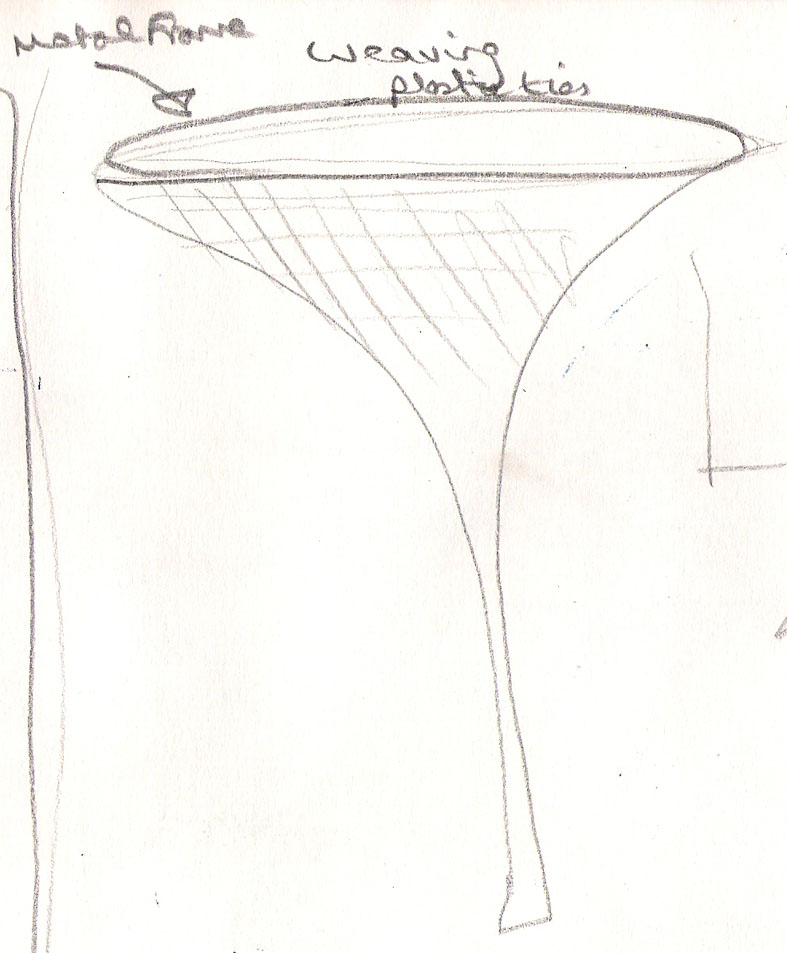
During our residency we want to explore the idea of habitual waste in Berlin making artwork that responds to this and comparing it to the waste habits in Peru and England. We are interested in the social aspects of this topic and what we can learn about different cultures from their daily lives. We are keen to explore the functionality of waste – taking the material and creating something new and useful in a fun way i.e. weaving raincatchers from discarded bottles or strips of plastic, creating fantastical new landscapes from discarded images of Berlin or installations from recycled paper/cardboard to develop our skills in paper engineering and origami creating places to sit and reflect.

Here are some of our initial ideas......


Transporter Phase 2 -
As mentioned previously, we are currently developing Phase 2 of Transporter and hope to create a programme that will allow further exchanges and discussions to be made between the local, national and international links that we have made so far during the project. We hope to develop a wider discussion around the theme of sustainable arts such as ideas on the re-presenting of traditional craft and re-examining of waste materials.
As part of our interim phase funding we talking to a variety of organisations and artists who have similar interests and can widen our knowledge bank. We can then add this information and any skills to our blog and flickr site. We hope to develop a touring exhibition and develop a live exchange between artists and organisations from different countries.
Some of the organisations we are currently talking to are –
As ever, we will update our blog as we go along and will post videos and images on our Flickr site.


If you think you have a project or an idea that would link to Transporter then do get in touch.


Tuesday, 17 January 2012

Update since our return to the UK & the next phase of Transporter...

Spending time at Sachaqa Centro De Arte and our experiences in San Roque de Cumbaza, Tarapoto, Chazuta and Lamas has allowed us to take a fresh approach to our art making, giving us time and space to learn to just relax and not force creativity! Being away from anything familiar really made you think about yourself as a person, who you are and who you want to be- something we didn’t expect! The peaceful and undisturbed surroundings were AMAZING and the way Trina and Daniel have set up the centre in a very relaxed and informal manner means you are free to work as and when you please. We were so inspired by the beauty of the place as well as the sounds and movement from the river, weather, trees and wildlife. There was thunder and lightning like we’d never experienced before, frogs as loud as horns, the biggest cockroaches we've ever seen, an orchestra from nature every night and the most beautiful coffee, pineapple and chocolate we’ve ever tasted!

Since leaving Peru we have been developing new work from ideas inspired by our time there which we did not have time to realise whilst we were there. We are currently looking at creating sculptural work from handmade paper we made whilst working with local artisans in Lamas – looking into the techniques of paper engineering and origami. We are also developing a sound and film piece made from the footage and recordings that we took as we travelled around Peru and during our daily walks around San Roque de Cumbaza where we were based. This new work will form the basis of the exhibition we are hoping to deliver in March 2012 (date and place tbc). We will post more information about this exhibition as soon as we have it!

Since our last posting we have been in contact with Lima University’s sculpture department and Axis Arte (www.blog.pucp.edu.pe/blog/axisarte ) whom we met just before our return to the UK. We are organising an online exchange between students from Lima University and Newcastle University and will be using the theme of sustainability within traditional art forms as a starting point from which to develop a relationship. The students will share ideas and thoughts around this subject and also discuss the differences and similarities between how art courses are taught in the UK and Peru.

Our next stop on the Transporter journey is to Berlin in August 2012 where we will be artists in residence in Kunst-Stoffe, an arts organisation that looks at the creative re-examination and re-use of recycled materials. While we are there we will make work inspired by our travels so far and immerse ourselves in their culture.

We will add more info to our blog as we develop this project so keep checking in with us and remember our Flickr account (http://www.flickr.com/photos/67813410%40N05/ ) where we have recently added some video footage of local artisans singing about their passion for the work that they do!!

Our Artwork/ New ideas - how has this developed our arts practice?

It was quite a struggle to spend lots of focused time on making artwork when there was so much to take in and adjust to in Peru. We were out of the studio for 1 week in Chazuta and also spent a lot of time organising the Lamas event, updating the blog etc. That said, the inspirational surroundings and unique culture of the place meant that you couldn’t help but want to respond creatively to it.
Land Art/Natural Sculpture: We experimented with our first land art pieces which was exciting. There was a real sense of connection between the people and the environment where we stayed and this definitely rubbed off and made you think of how disconnected we are to our plants and animals in UK. We tracked a dried up channel from the main river near our studio and installed a pink line of petals from the Palmarosa tree along where the river use to run- the contrast of the bright pink petals against the mossy green rocks looked amazing. Weirdly, 4 days before we left there was a terrible storm and the river broke its banks filling the dried up river bed and washed away our Palmarosa line. The locals said the last time the river had done this was 11yrs ago and then again 100 yrs before that!


Film/Sound work: We also captured a massive amount of film and sound footage. The jungle was so filled with life and the staggered noises of frogs, crickets, bats, dogs and cockerels created a sound piece every night! Ants and butterflies were great to try and capture too- we are going to use our footage to develop an installation which will attempt to recreate our experience.
Ceramics: The potential of ceramics is also something which became clear when we worked with the ceramicists in Chazuta. It was so refreshing to be hands on with the material and we began making casts of the local environment. We want to continue this in the UK and any other travels to build up a giant clay picture of different places. We also want to explore the idea of the boundary between practical pottery or craft and when it can become art - thinking about pushing the material to its limits or creating a pot which doesn’t function as a pot etc. We are looking at sourcing clay in the UK and if there are places to collect and prepare it ourselves as the ceramicists in Chazuta do. We also used the process of making wishing pots in the plaza to interact with the local community in the village- this was an interesting experience and something the local children found intriguing!


Weaving:
We met someone in the village who wove with discarded plastic sourced from the nearby town who had ingeniously taught himself to make baskets. Chumbie weaving (colourful belts hand woven from cotton) is also a beautiful and skilful indigenous craft and both methods have inspired many ideas in us to do with weaving different materials to create vessels of some kind. We had visions of creating a giant water catcher installation.


Natural pigments: We collected lots of stones from the river which we have crushed to create painting pigments and plan to test these out back in the UK and see what we can find locally which can be used in the same way.
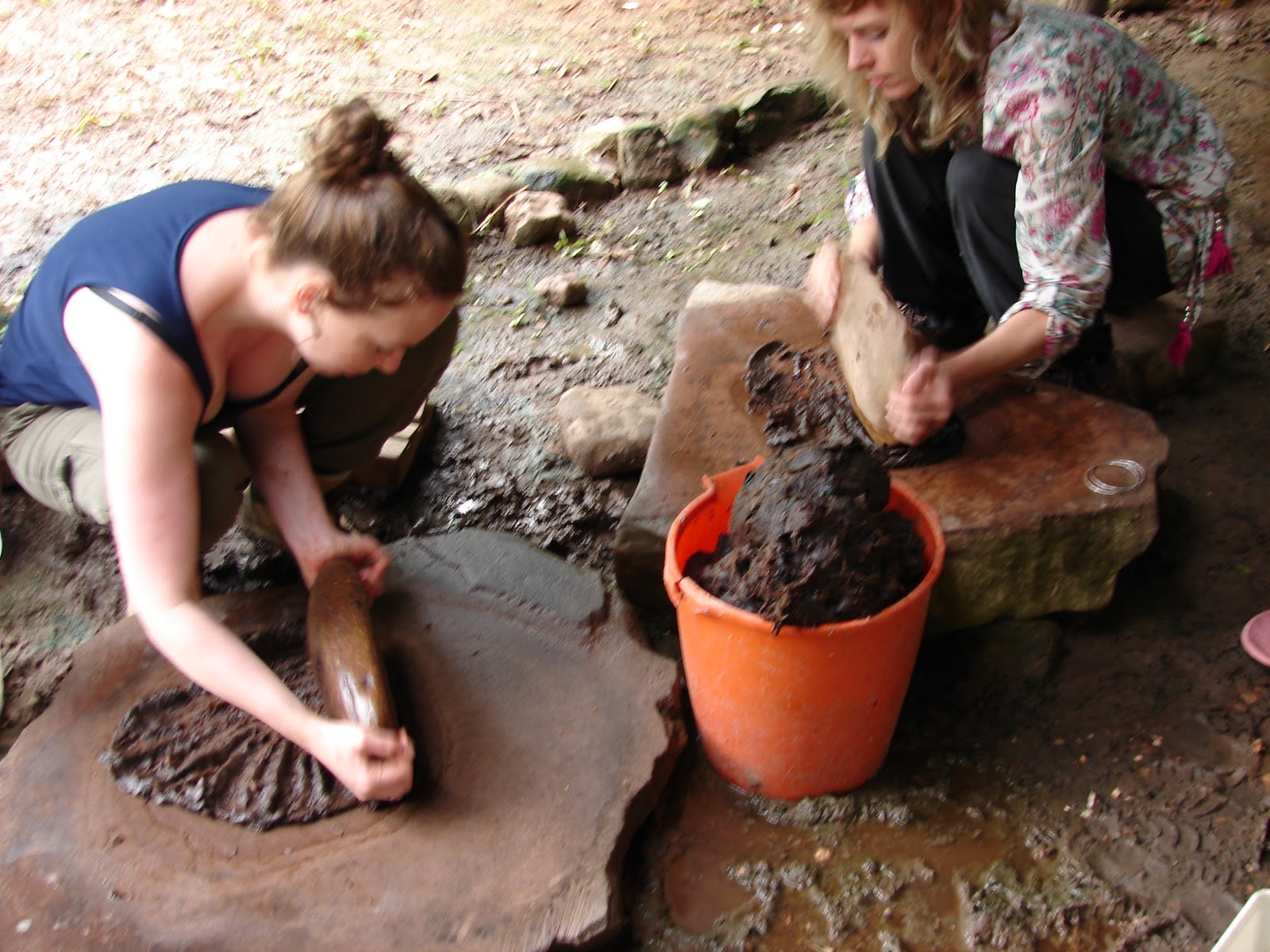
Paper Making: Having made our very own paper in Chazuta we are now looking to sculpt with the sheets in some way, the paper is so thick and has such a tactile quality that we are going to experiment in 3D with it to see how far we can push the material

As well as the skills and crafts we were also inspired by the people we met and worked alongside. Sachaqa Arts Centre allowed us to work alongside a variety of artists, all unique in their artforms, experiences and ideas and all of whom made our time in Peru the fantastic journey that it was.
Lena Huber is a photographer and writer from Switzerland. Lena really inspired us by her refreshing approach to life, a free spirit and one of those rare people in life that can truly be inspired and interested in anything that she comes across. http://www.sachaqacentrodearte.com/page3.php
Jaime Miranda a sculptor from Lima, Peru. Jaime recently studied at Chelsea College of Art, London and has an amazing talent as a sculptor. Jaime was a great person to talk to about anything and everything and put us in touch with some fantastic people in Lima. We really hope to work with Jaime again in the future. www.jaimemiranda.com/index.htm
Trina Brahman, painter and founder of Sachaqa Centro de Arte, originally from Bradford, England Trina was very inspirational to spend time with and allowed us to see and understand different ideas on life. Trina paints visions that she experiences using natural pigments and attributes these experiences to living in the jungle, feeling a close connection to nature is important to her work. Trina has a unique approach to painting and really believes in her art, the centre and the life she is building in the highlands of Peru with her husband Daniel Lerner and baby Jacob. http://www.sachaqacentrodearte.com/page3.php


LAMAS SIN FRONTERAS / Lamas without Borders - Event review:

To pick up from the last post, and although we’re back in the UK still trying to digest our Peruvian adventure, we will tell you how the Lamas Sin Fronteras event was received on 6th November.  Firstly, this type of event, mixing art forms - traditional with modern, including participatory activities, was unprecedented in the San Martin region. We organised the event in partnership with Sachaqa Centro De Arte and Proyecto Cultural/Lamas Council (http://www.turismolamas.com/ and http://www.lamastrespisos.com/ ).
The event aimed to celebrate the culture of Lamas and the San Martin Region and bring the idea of different culture and crafts to the forefront of people’s minds. We presented a mix of traditional and modern art practices from the local area as well as from Lima, the UK and Switzerland in order to showcase the differences and similarities. Demonstrations from local artisans sat alongside workshops and exhibitions by students and local and international artists as well as music and traditional dancing from local young people. We also included a presentation of traditional crafts from around the world (by Sam Taylor as part of the en-compass project - www.en-compass.ac.uk) and a demonstration of Yoga which was something brand new to this audience.
100’s of people gathered over the course of the day in Lamas’ main plaza and looked, questioned, learned, relaxed and took part.
Later in the day, after people had time to take everything in and (hopefully) feel inspired, we arranged a Factory Night. This concept involves bringing creative people together in an interesting space, venue or site and allowing them to talk and exchange ideas. It works very well in the UK but we were nervous of how it would be received as people told us that Peruvians are very shy. We needn’t have worried though as after we announced to the crowd the concept of Factory Nights they really got involved. They loved the art materials and spread out all over the plaza and drew, sketched, took photos, it was like a big art making session! It made a great end to the day. Lamas Council was so happy that they want the event to run every year and are set to make it an annual get together of any creative people to exchange ideas and experience art on the street

 
See more images on flickrTRANSPORTERproject

Sunday, 8 January 2012

Peruvian Press!!

Here are some of the press cuttings that we received for the Lamas Sin Fronteras event in Peru. You can also see images from the event on our flickr account - http://www.flickr.com/photos/67813410%40N05/ .

We also managed to gain some air time on the local radio station and appeared on the popular local TV programme 'La Cocina de Manolo'!!!!


Friday, 4 November 2011

Lamas Sin Fronteras - Lamas Without Borders

With less than a week to go until we leave Peru (the first phase of the project) we are looking forward to our event on Sunday 6th November which has been organised in partnership with Sachaqa Centro De Arte and Proyecto Cultural. The event looks to celebrate Lamas and its culture - mixing traditional and modern art practices from Peru and England. We have a variety of cultural activities taking place including a presentation of traditional crafts from around the world (by Sam Taylor as part of the en-compass project - www.en-compass.ac.uk), demonstrations from local artisans and workshops by local and international artists to name a few. We will post images and reviews on how the event goes next week!!!!! 


Thursday, 27 October 2011

Day 20 – CREATIVE WORKSHOPS IN CHAZUTA

Since we last posted our blog we have spent a week in Chazuta, a nearby town, where we have taken part in workshops in ceramics and natural paper making, collected stones from the river to make natural pigments and spent time with the women at Mishki Cacao (a local organic chocolate makers).

This has been an invaluable experience and given us insight into traditional crafts, heritage and customs from the San Martin region. Spending time with the local women has given us a huge amount of inspiration for creating our own work and allowed us to gain in depth knowledge of the history and skills involved in each craft as well as the cultural intangible heritage attached to each one (such as dances and songs relating to the processes etc). These groups are not yet on the tourism map, although with their passion and drive it may not be long before they begin exporting their goods. It was interesting to observe how these businesses with very little money located in a very remote area, on the fringe of the Amazon rainforest can operate as they deal with sporadic water and electricity supply and main transport route still under construction.  Our workshops were organised by Sachaqa Arts Centre who are our main partners within the Transporter project so it is good to see these types of links being made across the region of San Martin as a benefit to both the arts centre and the local craft groups/businesses.

We discussed a great deal about developing businesses and how to be sustainable (both economically and environmentally) whilst keeping true to roots. We all learnt a great deal, but in different ways. We were able to offer advice on marketing, networking and sharing resources whilst their processes highlighted how much waste there is in the West; they are very creative with the resources they have, every bit of a cacao bean can be used for something as can the banana tree. Even shop displays, signage and decoration are handmade so there is a real sense of individuality to buildings and property- something Britain has unfortunately lost on mass.  We saw a big difference between Chazuta and San Roque de Cumbaza (where our residency is based) and felt this experience has been essential to understanding two very different communities. Chazuta felt more like a working town with a harbour, people making fishing nets and spinning cotton on the streets.


We have uploaded a range of images and videos from our time in Chazuta which gives a guide to the processes for each craft as well as photos from other things we have seen –http://www.flickr.com/TRANSPORTERproject

Ceramics – Chazuta is famous for its ceramics and the women who taught us over the week, many of whom are in their 80s, have been creating ceramics since childhood. The craft is extremely important to them as a way of life, as it was borne out of necessity to make pots to hold food and drink and now it is also a way to make money to provide for their families. They are currently building a ceramics museum next to the studio, to show both ancestral and contemporary ceramics and to display ceramic burial tombs from an archaeological dig. The difference between ceramics from Chazuta and Lamas areas was discussed; Lamas who create less decorative, more practical pottery whilst the Chazuta ceramicists are experimenting with techniques and developing new styles and iconography for their creations. This posed interesting questions surrounding when pottery for practical purposes becomes art? Something we are going to explore further with our own art work.

Paper making – This group of 6 people, 1 man and 5 women make paper from natural materials such as banana plants, coconut shells and leaves, sugar cane and various other trees. They were taught the process by someone from America who visited them 10yrs ago. Since then they have built their own studio and have orders from Lima and Tarapoto. It is a very labour intensive process and no machinery is used. They have a garden where they grow banana trees to replace the ones they cut down. They take about a year grow again to bear fruit and use for the paper making process.

Mishki Cacao – formed in 2009 and became officially a company in 2011. Mishki means ‘sweet’ in Quechua (an indigenous language of Peru which is still spoken by many in Chazuta). This was a strong family connected business where the husbands organically farmed the cocao bean and 13 women naturally processed it into the most beautiful chocolate we’ve ever tasted! The women even had songs they sang about empowerment and their passion for their craft was inspiring.

Before coming to Peru we made contact with Allpa, an organisation that distributes Peruvian handmade crafts to buyers across the world with a focus on environmentally friendly and fair-trade products, and so we are due to meet them on our return to Lima at the end of our trip. This will provide us with a chance to promote the work of the crafts groups in Chazuta and see how links develop there. We also hope to meet with Lima University and the Museum of Art Lima (MALI) to make links with the next stage of the Transporter project and extend rednile’s international links.